Otter.ai announced on Tuesday that its AI note-taking tool can now follow conversations across more than 30 languages, including when speakers switch languages in the middle of the same meeting. The update adds support for 27 languages, the largest language expansion in the company’s history, bringing the total to 31 once the rollout is complete. For international teams, the change targets a familiar frustration: meetings that cross borders rarely stay in one language, and transcription tools have usually forced users to pick one language before the call starts.
How the multilingual transcription works
The new feature automatically detects when the language changes and keeps transcribing without any settings to adjust. A call could move from English to Korean to Portuguese, and Otter follows the conversation throughout. Thirteen of the new languages are available now: Mandarin Chinese, Korean, German, Italian, Cantonese, Portuguese, Russian, Indonesian, Malay, Dutch, Turkish, Vietnamese and Polish. Fourteen more are coming soon, including Swedish, Danish, Finnish, Arabic, Hindi, Thai, Hebrew, Norwegian, Greek, Macedonian, Persian, Czech, Hungarian and Romanian. The new languages run on Otter’s own speech models, trained on publicly available datasets, with native-speaking volunteers reviewing transcripts to check accuracy.
Why switching languages matters
Most meeting tools treat language as a setting you choose once. Real meetings do not work that way, especially in global companies where a team in Berlin talks to colleagues in Seoul and Sao Paulo on the same call. People switch languages to explain a point, quote a client, or simply because it is the language they think in. When transcription stops at the switch, the record of the meeting loses exactly the parts that were hardest to follow live. Otter’s pitch is that a meeting record should cover the whole conversation, not just the parts in the dominant language. As an Otter spokesperson put it, the company is breaking down language barriers so any company, no matter where it is based, can build a system of record for voice AI communication.

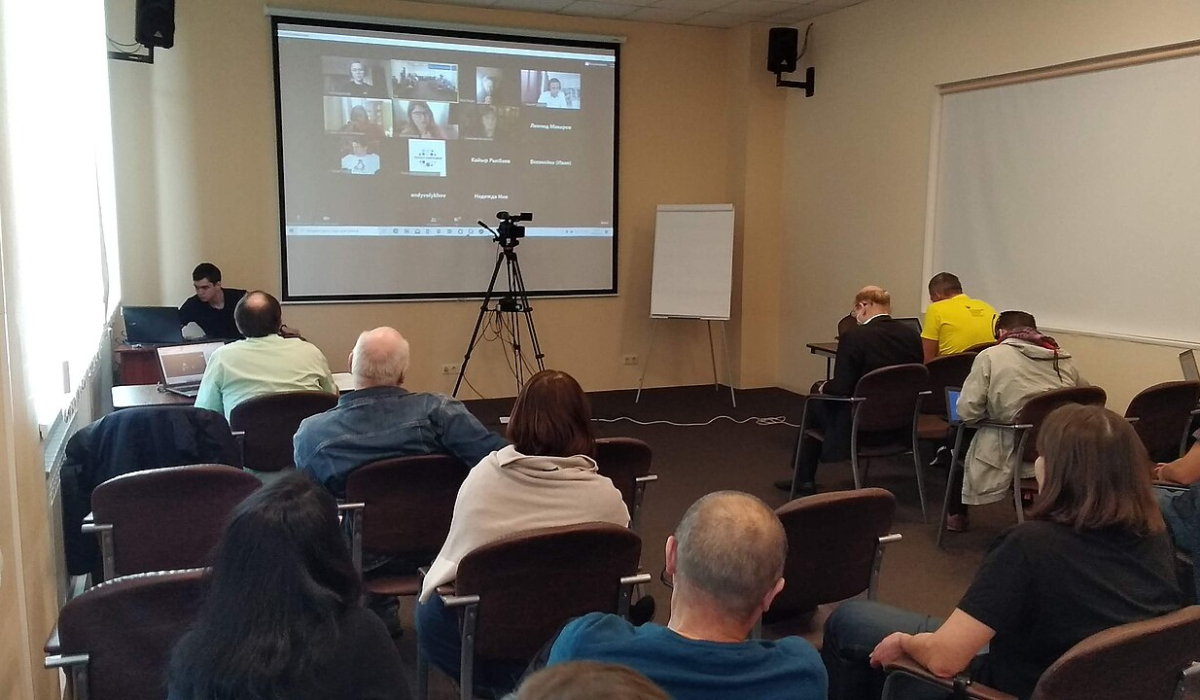
A business professional takes notes during a meeting. Photo: Shixart1985, CC BY 2.0, via Wikimedia Commons.
Otter’s move beyond transcription
The language expansion is part of a wider shift at Otter from a transcription tool into a broader workplace AI product. The company recently raised $320 million in funding from General Catalyst, and it has been adding features that use meeting history rather than just recording it. Work Mode pulls information from previous customer conversations, outstanding action items, notes from teammates’ similar calls and recent Google Drive files to help users prepare for upcoming calls. Live Assist offers real-time coaching during meetings, analyzing the conversation as it happens and suggesting relevant points. The multilingual update fits that direction: the more of a meeting Otter understands, the more useful its summaries and suggestions become.
What to watch next
Accuracy will decide whether the feature earns trust. Transcription is hardest in exactly the situations Otter is targeting: accented speech, rapid switching, overlapping voices and technical terms. Native-speaker review during training is a good sign, but the real test is live meetings with mixed-language teams. The coming languages also matter for reach: Hindi, Arabic and Persian are spoken by hundreds of millions of people, and their arrival would extend Otter well beyond its current base. Competition is heating up too, as every major meeting platform adds its own AI notes. Otter’s bet is that understanding the whole conversation, in whatever language it happens, is the feature that keeps it ahead.
Sources: TechCrunch (link).