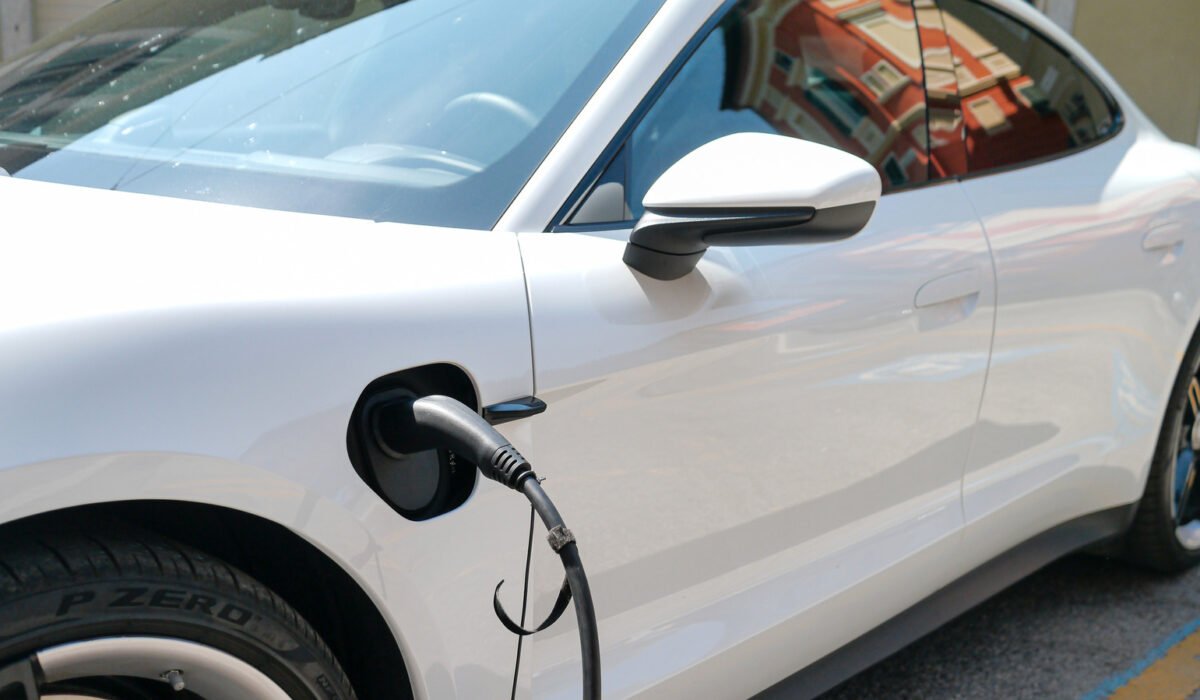
Most electric vehicles circulate liquid coolant through their battery packs, a process that helps keep the cells at an optimal temperature. If you arrive at a fast‑charging station on a cold morning without first notifying your car, you may notice slower charging. Many EVs use the drive time to a destination charger to pre‑heat the battery. Tesla’s owner manual advises drivers to start this warm‑up 30 to 45 minutes before reaching the charger, while Porsche warns that skipping the step can reduce charging power. This preparation is part of the thermal‑management system that modern EVs employ, which typically includes a cooling loop that pumps coolant through tubes or metal plates pressed against the cells, then moves the heat to a radiator or the vehicle’s air‑conditioning system.
A fleet‑management study by Geotab that followed more than 22,700 electric cars found that batteries lose an average of 2.3 percent of their health each year. Vehicles operating in hot climates shed about 0.4 percentage points more annually than those in milder regions, and cars that frequently used fast chargers delivering over 100 kW lost roughly 3 percent per year compared with 1.5 percent for drivers who rarely used such chargers. At that rate, a battery would retain roughly 77 percent of its capacity after ten years, aligning with research that suggests EV batteries can outlast early expectations.
Fast charging pushes 300 amps or more through the pack, generating substantial waste heat that must be removed. A 2021 review in the journal *Energies* reported that a temperature gradient of more than five degrees Celsius across a single cell can accelerate aging by 25 percent, underscoring the need for a cooling system that keeps the entire pack balanced and regulated. In cold conditions, internal resistance rises, and rapid charging can cause lithium plating—a buildup of metallic lithium on the electrodes that worsens as temperatures drop. The Recurrent analysis of over 30,000 U.S. EVs showed that batteries delivered about 78 percent of their ideal range at freezing temperatures and around 70 percent at minus seven degrees Celsius. Heating the cabin accounts for roughly two‑thirds of the extra energy an EV consumes in cold weather.
Cooling approaches vary. The original 2010 Nissan Leaf relied on passive air cooling for its 24 kWh pack, whereas Tesla, General Motors and Ford adopted liquid‑cooling systems. Leaf owners in Phoenix who tested twelve 2011‑12 models reported range losses that Nissan later said affected fewer than 0.3 percent of U.S. vehicles, according to *MIT Technology Review* in 2012. The third‑generation Leaf unveiled in 2025 finally moved to a liquid‑cooled 75 kWh battery. Liquid cooling, the *Energies* review notes, requires two to three times less energy than air cooling to maintain the same temperature, which is why most newer EVs use it.
BMW took a different route with its i3, eliminating the coolant loop and instead channeling refrigerant from the air‑conditioning system directly to the battery. British supercar maker McLaren went further with the Speedtail, submerging all cells in an electrically insulated oil. Simulations cited in the *Energies* paper suggest that immersion cooling can transfer heat up to three times more efficiently than conventional cooling plates.
Where does the heat go? Typically, the coolant loop connects to a radiator for low‑load situations and to a heat exchanger linked to the car’s air‑conditioning system for higher‑load tasks such as fast charging. Nissan’s thermal‑management system, for example, toggles between these modes and can route heat from the charger into the battery during home charging, a feature used to warm the pack in the newer Leaf. Tesla’s Model Y employs a valve dubbed the “Octovalve” to direct coolant among the motors, battery and electronics, as reported by *Jalopnik* after an engineering teardown. Tesla is also exploring a patent that would deliberately run the drive motor less efficiently to generate waste heat for battery warming. General Motors says its Ultium heat pump captures waste heat from the battery, power electronics and even passengers to warm the cabin, adding roughly ten percent more range.
China has recently introduced regulations that require new electric vehicles to demonstrate that their batteries will not ignite or explode if a cell experiences thermal runaway. Compliance depends on the pack’s cooling and insulation systems being able to prevent heat from spreading to neighboring cells.