Antigravity’s first drone, the A1, paired a 360‑degree camera from its parent company Insta360 with POV goggles and a one‑handed point‑and‑fly controller. The model was praised for its playful handling and for letting users re‑frame footage after the fact by cropping the 360 video to highlight the most interesting action. Instead of unveiling an A2, the company’s latest news is a new accessory package called the Follow Me bundle. The set adds propeller guards, a watch‑style remote and a ring‑shaped remote, and it promises hands‑free shooting and improved subject tracking.
The bundle can be bought as a complete package that includes the A1 drone for $799, or as a standalone accessory kit for $340. Existing A1 owners receive a discounted price of $272 for the add‑on components.
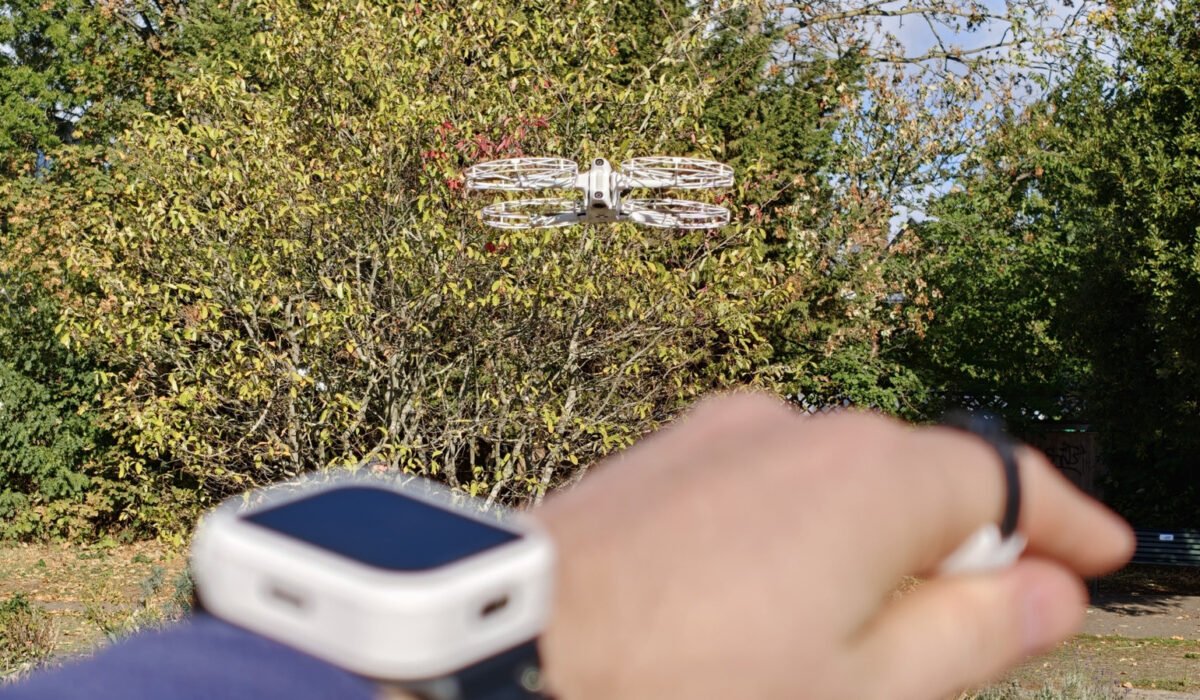
The watch remote and the ring work together to boost tracking reliability. By merging visual tracking with the watch’s built‑in GNSS, the system can lock onto moving subjects more consistently. The pair also introduces a new gesture‑control method that eliminates the need for the original controller and bulky goggles. After choosing a tracking target on the watch screen, the user holds down the button on the ring remote; an audible tone and a vibration confirm that the “drag‑to‑fly” mode is active.
The watch itself feels a bit dated, resembling an early‑generation Apple Watch replica. It features a touchscreen, a physical button, and charges via USB‑C. In practice it delivers roughly five hours of operation when linked to the drone, though most users will likely replace three drone batteries before the watch runs out. The device comes with a fabric wrist strap that feels a little fragile, and the ring’s Velcro strap is similarly delicate. The kit also provides a bike mount for the watch and a USB‑C charging grip for the ring.
Using the watch alone allows basic tracking, but adding the ring expands the control options. While holding the ring button, the user points at the drone and moves the hand left, right, up or down; the A1 follows those motions with noticeable responsiveness. A distance gesture is also supported: rotating the arm and wrist inward pulls the drone closer, while rotating outward pushes it farther away. The system does require the tracking subject to be selected at the outset, and it cannot move the drone simultaneously along all three axes. To adjust pitch after a horizontal or vertical shift, the user must release the button and press it again.
One suggestion for Antigravity is to replace the current single‑handed salute gesture for gaining altitude with something like a thumbs‑up, which might feel more natural. The watch remote also offers touchscreen shortcuts for launching the A1, switching video modes, tweaking flight paths and triggering pre‑programmed maneuvers such as vertical spirals and fly‑over sequences. A recent firmware update introduced a palm‑take‑off feature, allowing the drone to launch without a landing mat and even from wet or muddy ground.
Antigravity advises that the Follow Me bundle be used outdoors with at least two meters of vertical clearance. If the take‑off area is too cramped, the drone and watch will emit beeps until enough space is available. An experimental mode can lower the required clearance to one meter, but the company warns that this is at the user’s own risk.
The reviewer appreciated the ability to pilot the A1 without the full suite of accessories, especially for solo rides on a bike. The gesture system provides a straightforward way to influence the drone’s position while it follows, though the inability to control distance and orientation simultaneously was noted as a limitation. Voice prompts became irritating after a short time, but they can be disabled.
Pre‑programmed flight paths remain a strong point, delivering cinematic moves such as the “antigravity line,” which combines a vertical climb with a sudden dive toward the subject, as well as orbital routes that automatically avoid obstacles like trees or buildings.
When the A1 first launched, it lacked propeller guards, leading the reviewer to crash the drone into several walls and damage a few blades. The new guards are lightweight clips that attach over each propeller pair, offering some protection but not a complete shield against fingers slipping into the gaps. Installing the guards also prevents the propeller arms from folding, reducing portability.
The drone’s built‑in Deep Tracking mode relies on visual cues alone and can be inconsistent, especially during fast activities such as biking or snow sports. Previously, the A1 required both goggles and the handheld controller to operate; the Follow Me kit provides a lighter, though somewhat more limited, flying experience. The ability to fly solo, without a partner nearby, is a notable advantage for FPV enthusiasts.