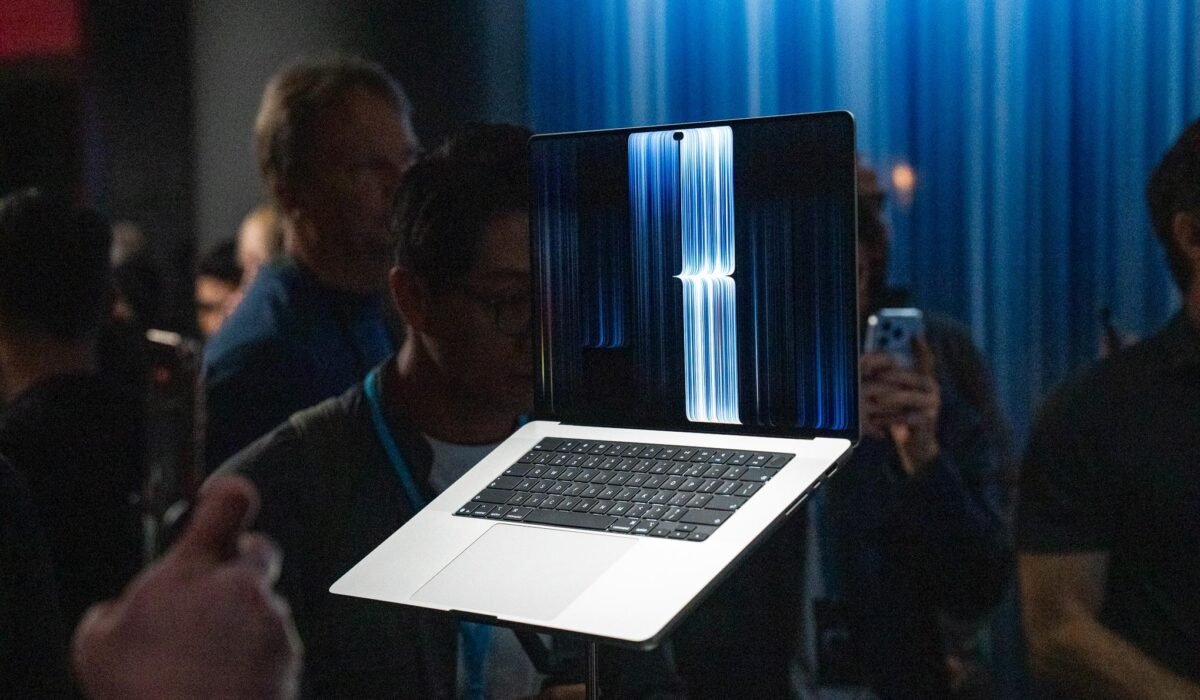
Steve Jobs once described touchscreen laptops as “ergonomically terrible,” and for more than ten years Apple staunchly avoided adding a touch screen to any of its computers. That stance has now shifted with the launch of the MacBook Pro, the company’s inaugural laptop to feature a touch-enabled display. While the design cannot completely eliminate the awkwardness of reaching up to interact with a screen, Apple has taken steps to make macOS more accommodating for touch input.
The new 14‑inch MacBook Pro is equipped with a ProLED XDR panel and tips the scales at just three pounds. This makes it noticeably lighter than the current line of non‑touch MacBook Pros, which begin at roughly 3.4 pounds in the recently announced M6‑based models. The addition of a touch interface marks a significant change in Apple’s laptop strategy, even as the company works to address the ergonomic challenges that have long been associated with such devices.