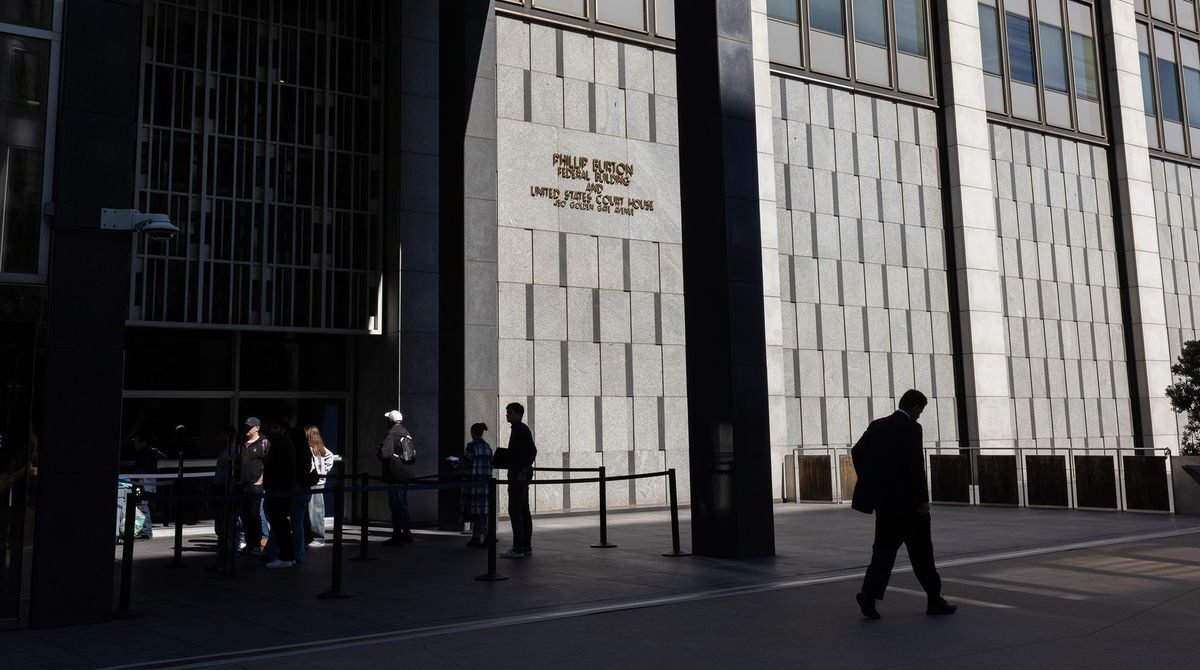
A federal magistrate judge in San Francisco ruled on Monday that Abdulrahman Alfozan, the former OpenAI engineer accused of installing a listening device in a company conference room, must stay in custody until his trial. The decision came after the judge expressed concerns that Alfozan’s connections to Saudi Arabia could make him a flight risk.
Prosecutors argued that the Saudi government had offered to back Alfozan’s bail without conditions, even suggesting that the Saudi consulate would work with a bail‑bond firm to finance his release. Judge Alex Tse questioned whether Alfozan was essentially an “asset” for the kingdom and whether a bond guaranteed by a foreign government could ensure he remained in the United States. “I find that problematic,” Tse said. “It seems like a blank check. ‘We’re going to pay whatever the court wants to get him out.’ I’m more interested in people from his family wanting to put up assets.”
Alfozan’s lawyer, William Pernik, dismissed the flight‑risk argument as unfounded, but the judge was not convinced that Alfozan was committed to staying in the country. “There is a real threat here that once he leaves the case is over,” Tse said.
Alfozan appeared in court wearing an orange prison uniform and a medical face mask pulled down over his neck. The courtroom was packed with journalists, a group of students on a field trip and roughly twenty supporters of the defendant.
While attempts to steal proprietary information are not uncommon in Silicon Valley, Alfozan’s case has attracted international attention because of the alleged amateur spycraft and the geopolitical tensions it highlights. Authorities have not disclosed a clear motive, but they noted that Alfozan previously worked for a Saudi venture‑capital firm, provided consulting services to Saudi companies, and is believed to have friendly contacts within the Saudi government.
Pernik said there is no evidence that Alfozan was spying for Saudi Arabia or engaging in covert activity. “It’s not as if he sneaked in under the covers of darkness,” he said of the OpenAI conference room. “This was an open room where anybody could work in.” The Saudi embassy did not respond to a request for comment.
After the hour‑long hearing, Pernik told reporters he was disappointed with the custody ruling and would continue to fight it.
Alfozan is a U.S. permanent resident who had been pursuing citizenship, but his ties to Saudi Arabia have come under scrutiny. Prosecutors allege that he maintained “frequent communications via WhatsApp” with a member of the Saudi royal family throughout 2025 and 2026. A court filing says the unnamed royal was recruiting Alfozan to return to Saudi Arabia for a role in an upcoming AI initiative. In a May message, the royal wrote, “Saudi needs you more then [sic] the US!” to which Alfozan allegedly replied “100,” indicating agreement.
U.S. authorities also claim that the Saudi government purchased a ticket for Alfozan’s wife and infant son to travel back to Saudi Arabia a few days after his arrest. The family’s sister‑in‑law’s husband, who works for the Saudi navy, later arranged a different flight for the wife, according to attorneys for both sides. Alfozan’s wife has not been charged, and the FBI declined to comment on whether she might face any charges.
Alfozan worked at OpenAI for just over a year before the company discovered a hidden audio‑recording device concealed in a roll of toilet paper behind a TV in an executive conference room used for confidential meetings. OpenAI found the device in late September, linked it to Alfozan, terminated his employment earlier this month and then the FBI arrested him.
He faces a maximum sentence of five years on a single count of using a device to intercept communications, though prosecutors say additional charges could follow. Evidence presented by the government includes alleged chats between Alfozan and an AI chatbot in which he sought advice on setting up listening devices, a photo of Alfozan looking behind the TV after OpenAI removed the recorder, and a photo of the device’s encrypted data. Authorities also recovered components for recording equipment at Alfozan’s home and images on his phone of other OpenAI monitors and a second conference room. OpenAI previously said it found a second listening device in a bag Alfozan had brought to the office and left unattended.
Pernik argued that the electronics found at Alfozan’s residence were part of personal projects, such as improving a smart litter box for their cat. “This is a gentleman who spent 15 years of life immersed at this intersection of technology and personal life,” he told the judge.
Prosecutors said Alfozan had the means to flee, pointing to the $385,000 salary and $2.2 million profit‑sharing package he earned at OpenAI, as well as additional income from prior positions at Meta and other U.S. tech firms.
Alfozan’s attorneys said his wife needed to leave the United States to renew her student visa, and that Alfozan had planned to accompany her before his arrest. They noted that the couple held a one‑way ticket to Riyadh, which they described as typical for Alfozan, who sometimes had to return to Saudi Arabia on short notice for work. Nas Yasin, another of Alfozan’s lawyers, said the wife’s flight was booked by her sister’s husband in a personal capacity, and that she had recently secured a visitor visa from the United States.