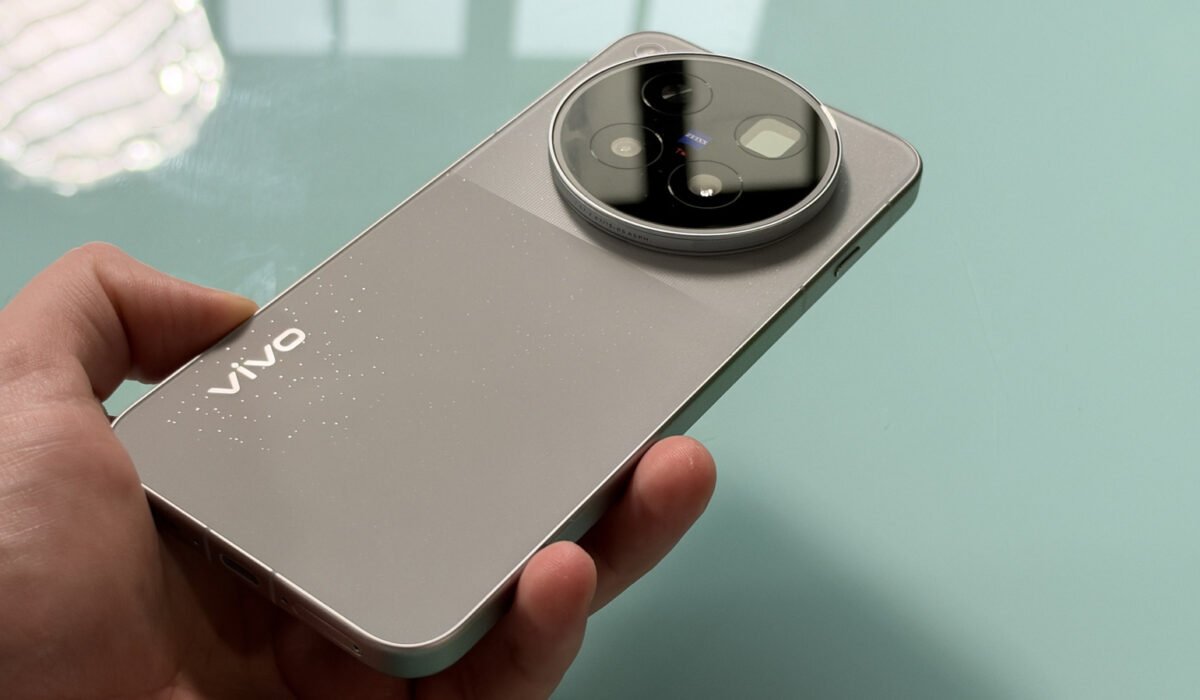
Vivo’s newest flagship, the X500 Pro Max, continues the Chinese maker’s focus on high‑end photography while giving videographers a richer set of tools. The device arrives alongside Oppo’s comparable offering, but each brand emphasizes different strengths. Vivo pairs the phone with attachable Zeiss‑co‑produced telephoto lenses and a cage‑style grip, underscoring its commitment to modular camera accessories.
The heart of the camera upgrade is a 50‑megapixel Sony Lytia sensor measuring 1/1.28‑inch with an f/1.6 aperture. Thanks to LOFIC technology, the sensor delivers 17 stops of dynamic range. A second 50‑megapixel ultra‑wide lens uses a 1/1.75‑inch sensor, while the periscope telephoto unit employs a larger 200‑megapixel 1/1.4‑inch sensor that provides lossless 10× optical zoom. Stabilisation has been beefed up: the main camera features three‑degree gimbal‑grade optical image stabilization, and the telephoto module carries a CIPA 7‑rated OIS system, helping to keep shots steady during long zoom or low‑light shooting.
Video capabilities receive a notable boost. The “Pro Video Mode” lets users load custom LUTs and see a real‑time preview of the final look. Vivo’s log format integrates with the ACES workflow, catering to professionals who edit on a smartphone. In practice, the footage recorded on the X500 Pro Max feels smoother than that from Oppo’s Find X10 Pro Max, with no noticeable judder even without an external gimbal. Low‑light clips avoid the pulsing‑pixel effect that can plague other devices, though the on‑screen controls are small on the 6.85‑inch display. One omission is an open‑gate recording option, a feature that Oppo still offers.
The upgraded MediaTek Dimensity 9600 Pro 2nm processor enables 4K video capture at up to 240 fps, doubling the 120 fps ceiling of Vivo’s previous X300 Ultra. While both Vivo’s LOFIC sensor and Oppo’s DeepPix approach achieve similar 17‑stop dynamic range, they use different methods: LOFIC adds extra capacitors to each pixel to store excess light, whereas DeepPix employs front‑deep trench isolation to physically expand pixel capacity. In side‑by‑side tests, Vivo’s photos appear more vibrant with higher contrast, but occasional highlight suppression can make images look overly edited, whereas Oppo’s colors stay closer to reality.
The X500 Pro Max supports two Gen 2 teleconverter lenses co‑designed with Zeiss. The Telephoto Extender adds 2.35× magnification, and the Ultra version pushes optical zoom to 4.7× on top of the 200‑megapixel periscope sensor. Because the underlying hardware mirrors the older X300 Ultra, image quality is similar, and the same AI‑driven processing quirks—such as text and facial detail being altered by the algorithm—remain. Users will need a new compatible case and mounting plate to attach the lenses securely.
Beyond the camera system, the phone’s design follows recent Vivo aesthetics, with a dot‑matrix pattern on the rear glass that catches light unless covered by a case. Inside, the device houses a massive 7,800 mAh battery in certain markets, an increase over the X300 Ultra’s 6,600 mAh cell, and supports 90 W fast charging plus bypass charging for uninterrupted power during gaming or high‑resolution recording. The 6.85‑inch screen shares the X300 Ultra’s 1,440 × 3,168 resolution, offers a 144 Hz refresh rate, Dolby Vision, HDR10+ support, and can reach up to 4,500 nits of peak brightness. The handset is rated IP68 and IP69 for dust and water resistance.