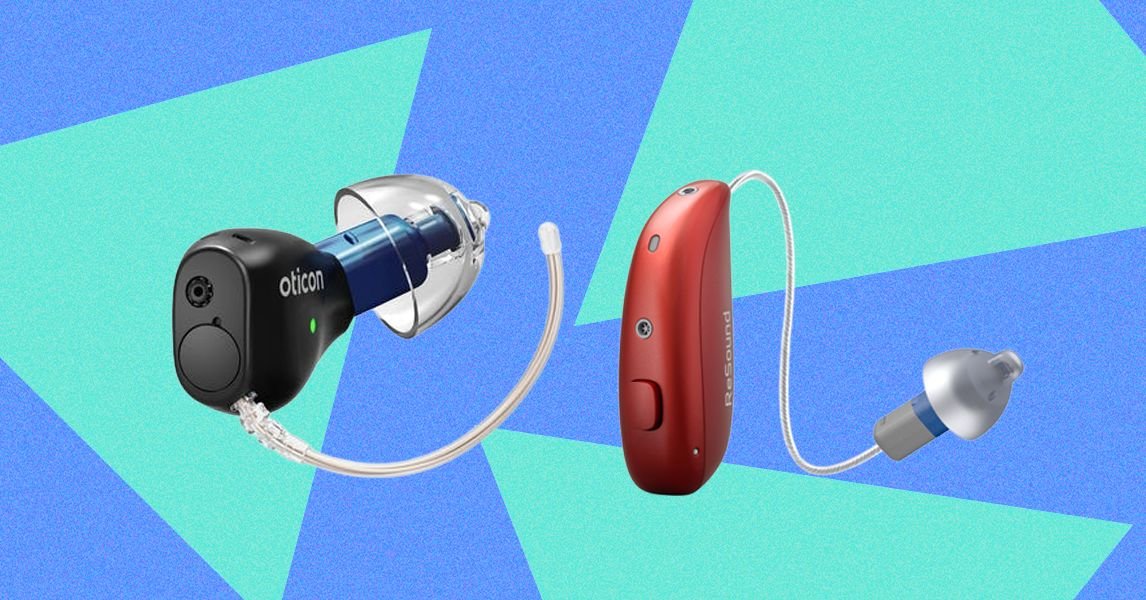
I have spent the last four years trying out more than 65 hearing‑aid models in a variety of settings, from quiet rooms at home to bustling outdoor venues. The market now offers a broad spectrum of devices, ranging from $100 over‑the‑counter options to $4,000 prescription‑only systems for mild to moderate hearing loss. After extensive hands‑on testing, I can say the Jabra Enhance Select M3 stands out as the top over‑the‑counter aid, while the Resound Sensia 9 is the best choice for those who need a custom‑fitted prescription device. For newcomers to hearing technology, Apple’s AirPods Pro 3 provide an affordable, intuitive way to experience improved hearing without a large upfront investment.
**Current top picks (updated October 2026)**
– **Best overall (OTC):** Jabra Enhance Select M3 – $1,995
– **Best prescription aid:** Resound Sensia 9 – $2,500
– **Best invisible aid:** Oticon Zeal – $5,000
– **Best hearing‑aid/earbud combo:** Apple AirPods Pro 3 – $249 (regularly $199 after a 20 % discount on Amazon)
### What to think about before you buy
Every individual’s hearing loss is unique, so it’s important to match a device to your specific needs and lifestyle. Budget is a major factor; hearing aids can be pricey, and many insurance plans provide limited coverage. Costs include audiologist visits, custom fittings, device purchase, and ongoing maintenance. Look for brands that offer trial periods so you can test the aid for several days and return it at no charge if it doesn’t work for you.
Discretion matters to many users. Although popular media often portray hearing loss as a condition affecting only seniors, nearly 10 million Americans under 60 experience some degree of hearing difficulty. Modern in‑the‑ear designs are far less conspicuous than older models, helping to reduce the stigma that can keep people from seeking help.
A professional hearing test is worth the effort. Online or app‑based screenings can indicate whether you might have hearing loss, but an in‑office audiogram provides a detailed map of your hearing profile. An audiologist can use that information to fine‑tune a device to your exact frequencies, something a generic over‑the‑counter setting cannot match.
### Types of hearing aids
Hearing aids generally fall into two broad categories: behind‑the‑ear (BTE) and in‑the‑ear (ITE). A few completely in‑canal (CIC) models also exist, though they are not sold over the counter.
– **Behind‑the‑ear (BTE):** The most traditional style, featuring a small case that sits behind the ear and a tube that delivers sound to an ear mold. Because of their size, BTEs can house more advanced technology and handle a wider range of hearing loss, but they are more visible.
– **Receiver‑in‑the‑ear (RITE):** Similar to BTEs, but the receiver sits inside the ear canal rather than in the case. They are marketed as a sleeker alternative, though the size difference is modest.
– **In‑the‑ear (ITE) / in‑the‑canal (ITC):** These resemble wireless earbuds and fit entirely within the outer ear. They can include directional microphones but may be more prone to moisture and earwax buildup.
– **Completely in‑canal (CIC):** The smallest, most discreet option, placed deep inside the ear canal with only a tiny thread for removal. CIC devices require professional insertion and are not available OTC.
### Self‑fitted versus preset devices
Traditional hearing aids are “fitted” both physically and acoustically. A professional not only molds the device to the shape of your ear but also programs it to match the specific frequencies you struggle to hear. Most people have uneven hearing loss, with challenges at low, mid, or high frequencies, so a custom fit is crucial for optimal performance.
Over‑the‑counter aids, like the Jabra Enhance Select M3, use preset settings based on general hearing‑loss categories. They allow users to adjust volume and basic programs themselves, offering a convenient option for mild to moderate loss when a professional fitting is not required. However, for more complex hearing profiles, a prescription‑only device fitted by an audiologist remains the gold standard.