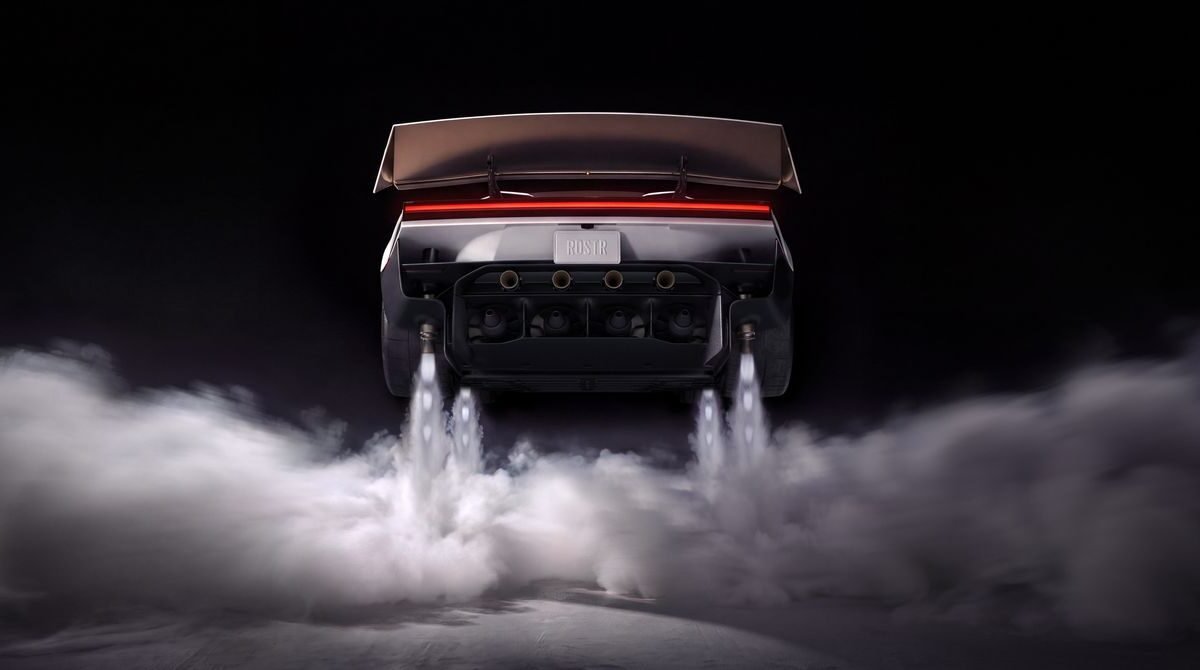
Last night Elon Musk unveiled the Roadster 2 at SpaceX’s test site in McGregor, Texas, and turned the reveal into a dramatic display. The two‑seat sports car accelerated from zero to 60 mph in under a second, launched off a steep ramp, flipped upside down in mid‑air and landed using onboard thrusters. The spectacle generated a flood of social‑media clips, even as Tesla’s share price slipped after the event.
Lars Moravy, head of vehicle engineering at Tesla, explained the technology to Hagerty in an interview conducted before the demonstration. According to Moravy, the car’s “flight” routine combined suction from powerful fans with rocket‑like thrust from cold‑gas thrusters.
Franz von Holzhausen, Tesla’s chief designer since 2008, created the angular bodywork that also appears on the Cybertruck, Model S, X, 3, Y and the Semi. The windows were tinted black to hide the interior, which held no driver because Musk said the company wanted to avoid any risk to people during the stunt.
The Roadster 2 will be rear‑wheel drive only, a departure from Tesla’s usual all‑wheel‑drive configurations. Two electric motors will deliver more than a megawatt of power—about 1,341 horsepower—and generate over 1,400 newton‑metres of torque, all through the rear axle. Despite its larger dimensions, the vehicle will weigh just under 1,700 kilograms, only slightly more than the original Roadster, which tipped the scales at around 1,300 kilograms.
Tesla promises a range exceeding 300 miles and a fast‑charging system capable of raising the battery from 15 to 80 percent in roughly ten minutes, the quickest charging rate the company has announced for any of its models.
Musk’s fascination with the Lotus Esprit “Wet Nellie” from the 1977 James Bond film inspired a key feature of the new Roadster. The Bond car used four rear propellers, and Tesla mirrored that concept with four 20‑kilowatt fans mounted on the Roadster 2. Moravy described these fans as part of a “sucker system” that deploys four replaceable skirts along the sides of the car. At low speeds, the fans pull the vehicle toward the road, creating downforce before the aerodynamic wings become effective. The system can generate more than two g of lateral force in a corner even below 50 mph. A similar approach appears on the McMurtry Spéirling Pure, which uses high‑speed electric fans to produce up to 2,000 kilograms of downforce.
The “SpaceX system,” a collaboration with Musk’s aerospace company, provides the thrust needed for the car’s brief hover and controlled descent. Behind the seats sits a 200‑liter carbon‑overwrapped pressure vessel rated to 10,000 psi, storing pressurized nitrogen for cold‑gas thrusters. These thrusters operate on the same principle used for spacecraft attitude control, delivering a simple form of rocket propulsion.
In launch mode, the rear thrusters can produce more than 80 kilonewtons of thrust, a figure comparable to the output of a Dassault Falcon 10X jet. This thrust, combined with the suction system, enables the claimed sub‑second 0‑to‑60 mph run, during which occupants would feel up to five g of acceleration. The performance‑focused version of the Roadster will retain the suction system but omit the thrusters, resulting in a 0‑to‑60 time of about 1.6 seconds and a top speed of 210 mph. The “thrust” variant includes the full suite of systems and is rated for a top speed of 230 mph.
The flight configuration adds another 400‑liter pressure vessel in place of the passenger seat, making the car a single‑seater and raising total thrust‑fuel capacity to 600 liters. Six additional thrusters—one at each corner and two at the front for yaw control—complete the setup.
Moravy cautioned that, unlike the vacuum of space where cold‑gas thrusters can fire continuously until the gas is exhausted, the system on Earth will lose power as the pressure drops. He likened it to inflating a balloon and then letting the air escape: the flow is strong at first and then tapers off as the supply diminishes. This limitation means the vehicle’s “flight” capability is brief, but it demonstrates a novel integration of automotive and aerospace technologies.