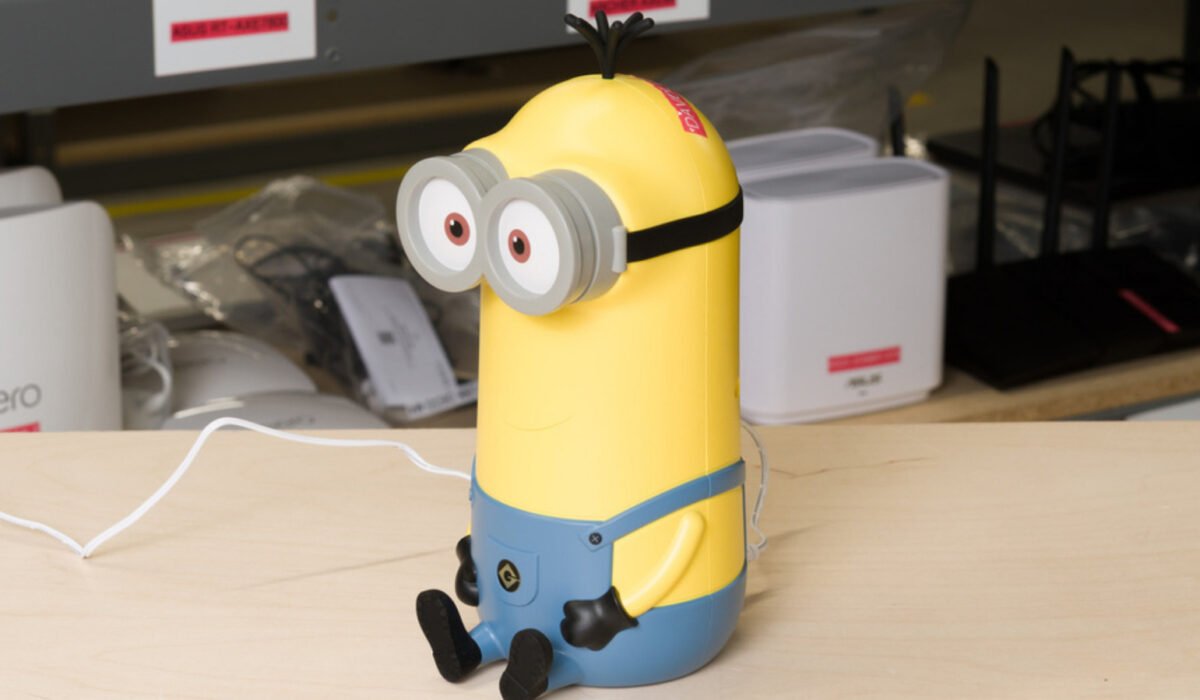
The whimsical Minion‑themed routers from South Korean networking firm Davolink have run into the same regulatory roadblock that halted TP‑Link devices. The taller of the pair, dubbed Kevin, went viral after an X post last month praised it as one of the best Wi‑Fi 6E routers available. The post generated millions of impressions and the Amazon listing, priced at $62.99, sold out within a day.
Unfortunately for fans, the Federal Communications Commission treats Kevin and its smaller sibling Bob like any other foreign‑made consumer router. Since March, the FCC has barred new overseas routers from obtaining the authorization required for U.S. sales unless the maker secures a specific exemption. Companies such as ASUS, Eero and Netgear have received those exemptions; Davolink has not. Consequently, while the two existing Minion models remain legal to sell, a Wi‑Fi 7‑compatible Minion is not expected to appear in the United States, and firmware updates for the current units are only assured through the end of 2028.
Davolink first unveiled the Minion routers at CES in January 2023 under an exclusive design agreement with Universal, and they entered the South Korean market that summer. Kevin, identified as the DVW‑632, is a tri‑band Wi‑Fi 6E device standing 9.6 inches tall. It offers a 2.5 Gbps WAN port, a single gigabit LAN port, WPA3 security, mesh support and an AXE5400 rating that breaks down to 573 Mbps on 2.4 GHz and 2.4 Gbps on each of the 5 GHz and 6 GHz bands. Bob, the DVW‑642, is the smaller model, a dual‑band Wi‑Fi 6 router with a gigabit WAN port and a top speed of 1.77 Gbps.
Davolink primarily supplies gateways and access points to South Korea’s three major carriers—SK Broadband, KT and LG Uplus. The U.S. government’s vulnerability database lists only a single issue for the company: a weak‑password flaw in a 2018 DVW‑3200N router, rated 9.8 out of 10 for severity and patched with firmware.
In testing by RTINGS, the Minion routers outperformed TP‑Link’s Archer AXE75 in speed and range, though the Archer offers four gigabit LAN ports compared with Kevin’s single port, meaning additional wired devices would require a network switch.
The FCC’s ban stems from a March 23 addition of “routers produced in a foreign country” to its Covered List, following a national‑security determination issued three days earlier by a White House‑convened interagency panel. Under the FCC’s interpretation, “produced” includes any major manufacturing stage, such as design or development, regardless of the company’s nationality. Devices authorized before the March listing—Kevin and Bob received approval between November 2023 and February 2024—may continue to be imported, sold and used. However, the listing also blocks any modifications to authorized units, including software updates, unless a waiver is in place. The agency has granted a waiver for security patches and compatibility fixes until at least January 1 2029, after which Davolink would need to stop updating the routers unless the rule is amended.
Exemptions, termed Conditional Approvals, are issued by the Department of Defense or the Department of Homeland Security and last up to 18 months. Applicants must disclose the origin of every component and firmware segment, justify overseas production, and present a detailed plan for U.S. manufacturing, complete with spending projections and quarterly progress reports. Netgear received approval on April 14, Eero on April 22 and ASUS on September 9.
Davolink, which has posted operating losses each year since 2022, has not publicly indicated whether it has applied for a Conditional Approval.