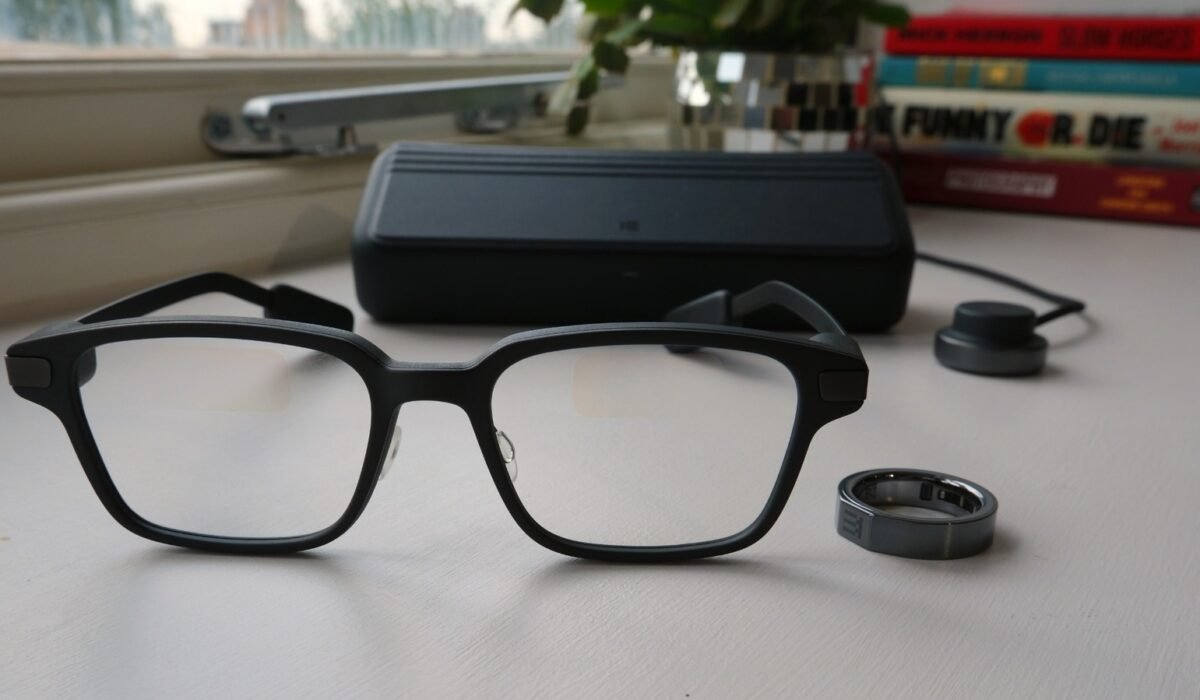
Even Realities’ second‑generation smart glasses earn a 6.9 out of 10 from Engadget. The device feels light, responsive and hits many of the features that defined the ideal smart‑glass experience, but it comes with a steep price tag, finicky controls and a ring accessory that adds more hassle than help.
**Hardware**
The G2 is a camera‑free pair of smart glasses that aim to replace a smartwatch. Waveguide prisms in the lenses project notifications, headlines, navigation cues, real‑time translation, teleprompter text and AI chat into the wearer’s field of view. The base model costs $599 and is offered in “Panto” and “Rectangle” frames, with grey, brown or green finishes. Prescription lenses start at $159 and can rise to $349 for stronger prescriptions.
Compared with the G1, the G2 is a bit lighter and features taller waveguide prisms that boost resolution to 640 × 350 pixels (up from 640 × 200). The field of view widens to 27.5 degrees, the refresh rate jumps to 60 Hz, and peak brightness reaches 1,200 nits. Battery capacity is larger, and the microphone count has doubled to four. The new IP65 rating protects the glasses from dust and water, a step up from the original’s limited rain resistance.
Touchpads are now located on the temple tips. Placing them behind the ears helps balance weight, but reaching them feels awkward and can be difficult for users with limited proprioception.
**Smart ring**
Even Realities also sells a companion ring, the R1, for an additional $249. The ring is made of zirconia ceramic, bears the company logo on a raised nub, and is designed to be worn on the index finger with a touch surface reachable by the thumb. It carries an IP68 rating, offers up to four days of battery life, and tracks activity, steps, heart rate, HRV, SpO₂, body temperature and sleep. All metrics sync to the G2, where they appear in the wearer’s line of sight, along with a “productivity score” that aggregates the data.
**User experience**
The promise of smart glasses is to keep eyes on the world while freeing the hands. In practice, the G2’s control scheme feels overly complex. The ring’s tiny touchpad can register four gestures—swipe up, swipe down, tap and press—but the system often confuses them. Opening the main menu requires a tap followed by a long press, yet the long press is frequently read as a swipe. Misinterpreted gestures lead to accidental app launches and make menu navigation feel frustrating.
Even Realities acknowledges the issue, and the lack of similar complaints online suggests the problem may be user‑specific. When the ring does work, the experience feels futuristic, especially thanks to the smoother 60 Hz display that enables natural scrolling. The upgrade from static frames on the G1 to fluid, computer‑like navigation is impressive, but the inconsistent input detracts from everyday usability.
**Verdict**
The G2 delivers a lightweight, high‑resolution display with solid durability and a respectable set of features for its price. However, the added cost of the optional ring, the unreliable touch controls and the limited customization options keep the device from feeling fully polished. For early adopters who value cutting‑edge optics and are willing to tolerate a learning curve, the G2 is a compelling glimpse of what smart glasses could become. For most users, the control frustrations may outweigh the benefits.