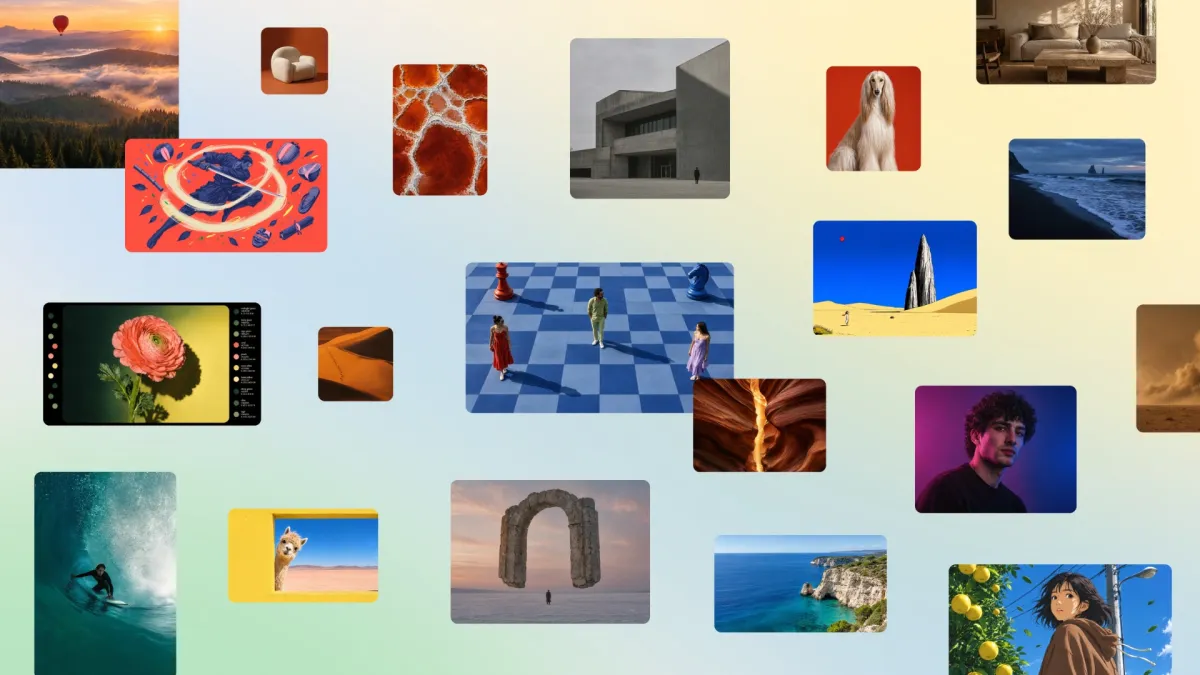
Canva has introduced its first home‑grown image‑generation model, named Canva Craft, built by the company’s research team to take on rivals such as Google, OpenAI, ByteDance and Meta. The system operates in two phases. First, it parses a user’s text prompt and drafts a layout plan that defines spatial relationships, relative sizes, visual hierarchy and the details needed for any text elements. In the second phase, the model creates an image up to 2,000 pixels wide, offering around 30 different aspect ratios suitable for various platforms.
Canva says this two‑step method helps produce pictures with precise object details and readable text, while still allowing users to edit specific parts without disturbing the rest of the image. Rather than training on photographs, the model was taught using Canva’s own design assets—templates for posters, social media posts, presentations, infographics, menus and other typography‑heavy layouts. Because of this design‑focused training, outputs from Canva Craft can be turned into layered designs via the company’s Magic Layers feature, an image‑to‑design transformer.
The tool is now accessible to all Canva users through the Dream Lab tab and will also be offered via the Canva API. Canva plans to integrate the model with third‑party chatbots such as ChatGPT and Gemini through its MCP platform. The company, which has relied on a variety of external image‑generation services, expects the new model to lower API expenses while giving it tighter control over quality and speed.
In 2024, Canva acquired the media‑generation startup Leonardo.ai, and researchers from that team contributed to the development of Canva Craft. Two lighter versions of the model—Craftfast and Craft‑ultrafast—are being prepared for release later this year.
Canva reported revenue of about $4 billion for the previous year. However, it recently trimmed its 2026 growth outlook, prompting analysts to estimate its valuation fell from roughly $42 billion to $35 billion.