
New York has stopped talking about AI safety and started enforcing it. On Tuesday, the state opened a registration portal for its new AI safety law, and the largest AI developers in the world now have until January 1, 2027 to sign up. The law, known as the RAISE Act, is the most concrete attempt yet by an American state to put rules, deadlines and fines around the companies building the most powerful AI systems. For the big AI labs, voluntary safety promises are giving way to paperwork, public reports and a regulator that can fine them.
What the RAISE Act actually requires
The law applies to large frontier AI developers, defined as companies with more than $500 million in annual revenue that build advanced AI models. If a company clears that bar, three obligations follow. It must publish its safety framework on its website, so the public can see how it tests models and handles risk. It must report critical safety incidents to the state within 72 hours. And it must issue public transparency reports about its models. The law was signed by Governor Kathy Hochul in December 2025 and takes full effect at the start of 2027, so companies have about seven weeks to comply.
A new regulator with real fines
Instead of handing the job to an existing agency, New York created a new office, the Office of Digital Innovation, Governance, Integrity, and Trust, known as DIGIT, to run the program and oversee the big AI labs. The fines are large enough to notice: up to $1 million for a single violation and up to $3 million for repeat violations. The state can also act against companies that fail to register, though officials declined to say exactly how. The same day, Hochul launched the New York Center for AI Responsibility and Research at the State University of New York in Binghamton, backed by $55 million in donations and capital announced in January. The center will independently evaluate advanced AI systems and help DIGIT review company safety frameworks.
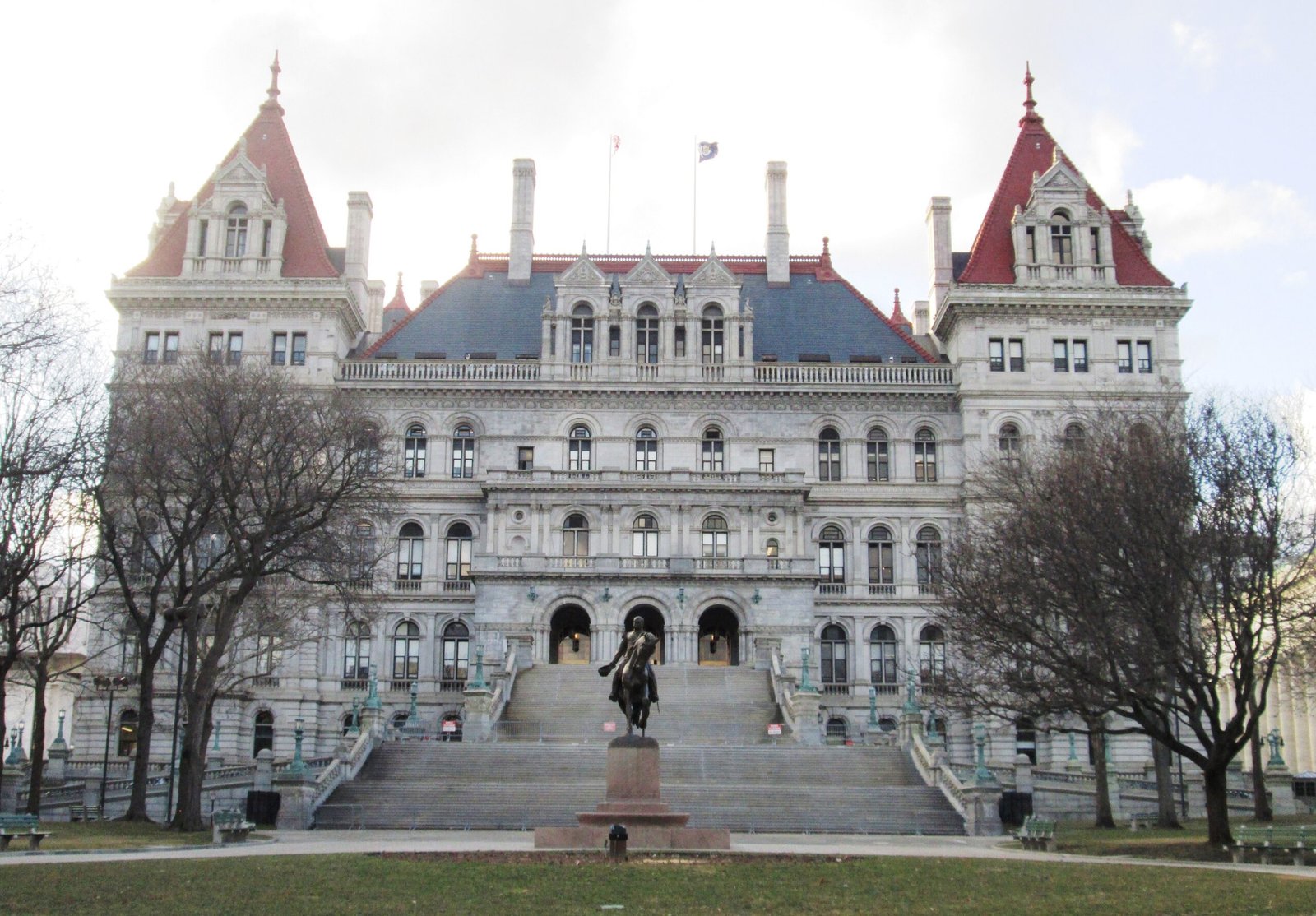
The New York State Capitol in Albany. Photo: Beyond My Ken, CC BY-SA 4.0, via Wikimedia Commons.
Why this matters beyond New York
New York is not acting alone. California passed its own frontier AI law, SB 53, which took effect in January and requires labs to publish safety frameworks, protect whistleblowers and report critical incidents within 15 days. Illinois passed SB 315, which takes effect at the start of 2027 and adds independent safety compliance audits. The pattern is clear: with no federal AI safety law in sight, states are building a patchwork of rules, and the biggest labs will have to satisfy all of them at once. That changes the economics of safety. Transparency stops being a marketing choice and becomes a compliance cost, and the framework published for New York will be read by regulators, rivals and the public everywhere.
What to watch next
The first test is simple: who registers by January 1, and what do their safety frameworks actually say. Vague documents would show the law has no teeth yet, while detailed frameworks with real testing commitments would show the labs taking it seriously. The second test is enforcement. DIGIT is brand new, and it will need to prove it can audit a frontier lab and fine one if necessary. Hochul framed the law as a rebuke to the industry, saying tech leaders describe their vision of AI as inevitable and treat collateral damage as worth it as long as they win the race. The RAISE Act bets the opposite: the race can have rules, and the public gets a say.