Access to the internet has improved dramatically over the past twenty years, but the benefits are unevenly distributed. In rural areas, providers may only deliver speeds as low as 1 Mbps, while urban dwellers can enjoy gigabit connections or faster. For many, the next options are 5G service or satellite broadband such as Starlink, each based on very different technology.
5G delivers internet through a mobile network, either via a smartphone or a dedicated 5G router placed in the home. Starlink, by contrast, uses a satellite dish to bring broadband directly to a residence. Because of these differences, performance can vary widely. In some locations a strong 5G signal will outpace Starlink, while in others a satellite link may be the only viable high‑speed choice. Prospective users must weigh the speeds they can realistically achieve and whether service is even available in their area.
There is no single speed that defines either technology. In the United States Starlink offers residential plans capped at 100 Mbps and 200 Mbps, plus a Residential Max option that promises 400 Mbps or more. T‑Mobile’s 5G Home Internet plans list typical download speeds ranging from 170 Mbps to 498 Mbps. These figures overlap but represent averages, not guarantees for any particular address. Real‑world testing provides a clearer picture.
PCMag’s 2026 tests of Starlink in rural Idaho recorded daily download averages of 145 to 170 Mbps on a Residential Max plan. Earlier 2025 tests showed a broader spread, from 20 Mbps up to 250 Mbps, underscoring how location, equipment and even time of day can influence results. For 5G, the provider’s network determines which towers and frequency bands a user can access. Opensignal reported average downloads of 249 Mbps on T‑Mobile and 184.3 Mbps on AT&T, while Ookla’s 2026 data showed 314.38 Mbps for T‑Mobile and 218.96 Mbps for Verizon. These stress tests reflect real‑world performance more accurately than marketing claims.
Download speed is only part of the equation; upload capacity and latency matter as well. T‑Mobile cites typical home upload speeds of 12 to 55 Mbps with latency between 16 and 28 ms. Starlink reports a median peak‑hour latency of 25.7 ms in the United States. “Surprisingly, connecting through satellites doesn’t automatically mean an enormous delay,” the company notes.
Coverage often proves more critical than raw speed. A connection that frequently drops or disconnects can be unusable even if it occasionally reaches high speeds. The 5G icon on a phone does not guarantee the fastest service, because carriers employ a mix of low‑band, mid‑band and high‑band frequencies. Low‑band signals travel far and penetrate obstacles, mid‑band offers a balance, and high‑band delivers the highest speeds but struggles with blockage. Home‑based 5G service may also be limited by network capacity at a given address; a location might have mobile coverage yet be ineligible for unlimited home internet due to high demand.
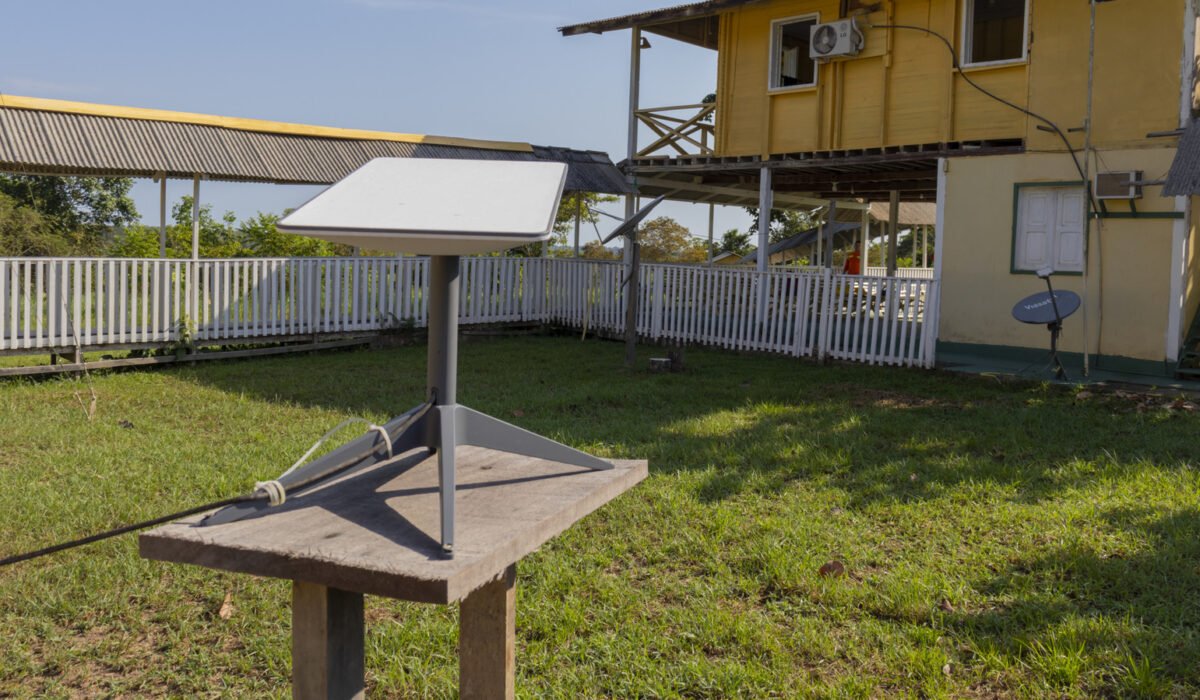
Starlink’s appeal lies in serving remote properties where mobile coverage is sparse. Its satellite network provides broad geographic reach, but customers must ensure the dish has an unobstructed view of the sky. The Starlink app includes an obstruction checker to help users find a suitable spot. Weather can also affect performance; heavy rain or strong winds may reduce speeds or cause outages. Congestion during peak times can further degrade service. Similar weather‑related issues affect high‑frequency 5G connections.
When comparing costs, it makes sense to look at dedicated 5G home internet plans rather than mobile phone contracts, which bundle voice and text services not offered by Starlink. T‑Mobile’s Rely, Amplified and All‑In 5G home internet plans range from $50 to $70 per month before taxes and fees. Starlink’s entry‑level plan, offering up to 100 Mbps, starts at $55, while the 200 Mbps tier costs $85. The Residential Max plan, capable of 400 Mbps or higher, is priced at $130 per month. For users who travel, Starlink also provides unlimited roaming plans that can cost up to $175. While the basic Starlink price aligns closely with T‑Mobile’s home internet, achieving the fastest satellite speeds requires nearly double the monthly expense.