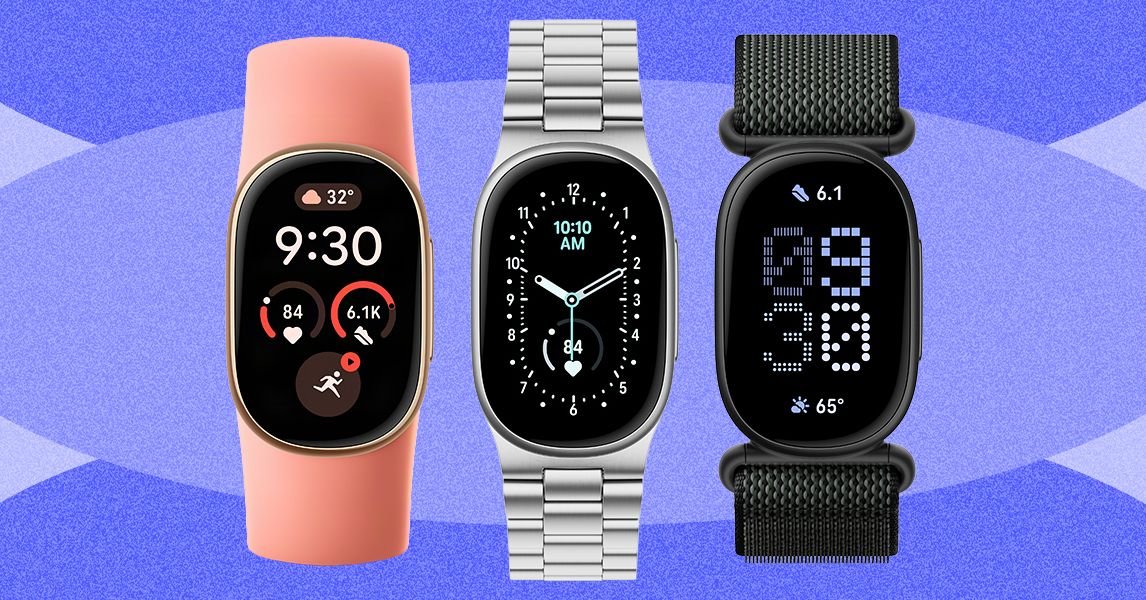
Google’s first repairable fitness tracker arrives with a larger, adjustable‑brightness screen and more sophisticated health tracking, but it still has some quirks. The band can be fiddly, auto‑pause feels overly sensitive, and there is no Google Wallet integration.
Earlier this year the Google Fitbit Air convinced me that a display on a fitness band might be unnecessary. Yet many users still want a screen, especially when the wearable also serves as a daily smartwatch. Google has not launched a new screen‑equipped tracker since 2023, and the older models are beginning to lag behind in both health features and hardware. This gap discourages newcomers who need a display and longtime fans who must choose among aging options.
Priced at $180, the Google Fitbit Edge sits $20 above Fitbit’s Charge 6 ($160) and $80 above the screen‑less Air ($100), while remaining far cheaper than Google’s Pixel Watch 5, which costs about $400. After testing the Edge for 12 days, I would suggest it to existing Fitbit users looking for an upgrade, but I still find the Air more compelling for my own needs.
The Edge is comfortable enough for all‑day wear and sleep. Its dimensions—39.2 × 25.5 × 11.5 mm—are slightly larger than the Charge 6’s 36.73 × 23.09 × 11.20 mm, yet the capsule shape feels more natural on the wrist than the earlier rectangular design. It may be a better fit for people with slim wrists or for those who find the Pixel Watch or Apple Watch too bulky to wear while sleeping.
Band choice also influences comfort. The Edge ships with Google’s Active Band, which works for workouts but is not my favorite. Other options include the high‑performance synthetic elastomer (HNBR) Active Sport, the breathable Performance Loop, a silicone Magnet band, and a Metal Links band. I switched between the Metal Links for dressier occasions and the Performance Loop for everyday use. The Loop’s micro‑adjustable fit makes it easy to dial in a precise size, though it can be tightened too much, and I noticed the clasp occasionally popped loose while adjusting. The tracker stayed attached on one side, so I was not worried about losing it, but the fastening did not feel as secure as it should. I eventually found the locking button stuck and had to jiggle the mechanism to free it.
The Edge’s 1.34‑inch display is the most obvious advantage over the screenless Air. I appreciated the ability to glance at metrics and control music during runs without stopping. The screen reaches roughly twice the maximum brightness of the Charge, making it readable in direct sunlight. Integrated Google Maps let me follow turn‑by‑turn directions from my wrist while running or cycling, eliminating the need to pull out my phone. I prefer Wear OS’s more colorful interface, though Fitbit’s watch faces feel a bit basic in comparison. Fitbit’s software still delivers up to seven days of battery life, a figure the Pixel Watch cannot match. The Edge works with both iOS and Android, unlike the Pixel Watch, and it is the first Fitbit device built for repairability, featuring a modular design and a replaceable battery similar to the Pixel Watch. This move likely anticipates new EU regulations that will require removable batteries in smartphones and wearables starting February 18, 2027.
In terms of health and fitness, the Edge marks a clear step forward from the Charge 6. Google added more detailed workout data and several hardware upgrades that make the Edge a more capable tracker. Monthly blood pressure and insulin‑resistance trends are now available, as are nightly SpO₂ averages, ranges, and changes over time. Continuous heart‑rate monitoring, cardio‑load metrics, and an updated ECG app with atrial‑fibrillation detection are also included. Users who employ a continuous glucose monitor can view glucose insights alongside nutrition logging.
Most of these advanced features are locked behind Google Health Premium, a subscription that costs $10 per month or $100 per year. Without the subscription, users still receive core metrics and scores, but deeper analysis and AI‑driven coaching are unavailable. A three‑month trial is offered with any new device purchase.
Hardware improvements include a barometric altimeter for tracking elevation changes and floors climbed, and the Edge finally carries an IP68 rating for dust and water resistance. The display now shows more of these metrics on the watch face, providing live workout data and visual guidance. A new gyroscope improves automatic activity recognition, though it can be overly aggressive. During outdoor runs the device auto‑paused when I stopped and resumed when I moved again, but it sometimes reacted to a single step forward, making the pause function feel too sensitive.